How a Browser Game Lets You Design Weapons
You know what a browser game is: no download, no install. The Agency runs right in your browser, on any device, right now. Here's what makes it different. The community designs the weapons. You don't need to know how to make games or code. Just have an idea. Post it on our idea board, everyone gets one vote, and the top-voted weapon gets built by our student team and shipped within a week. That's the promise.
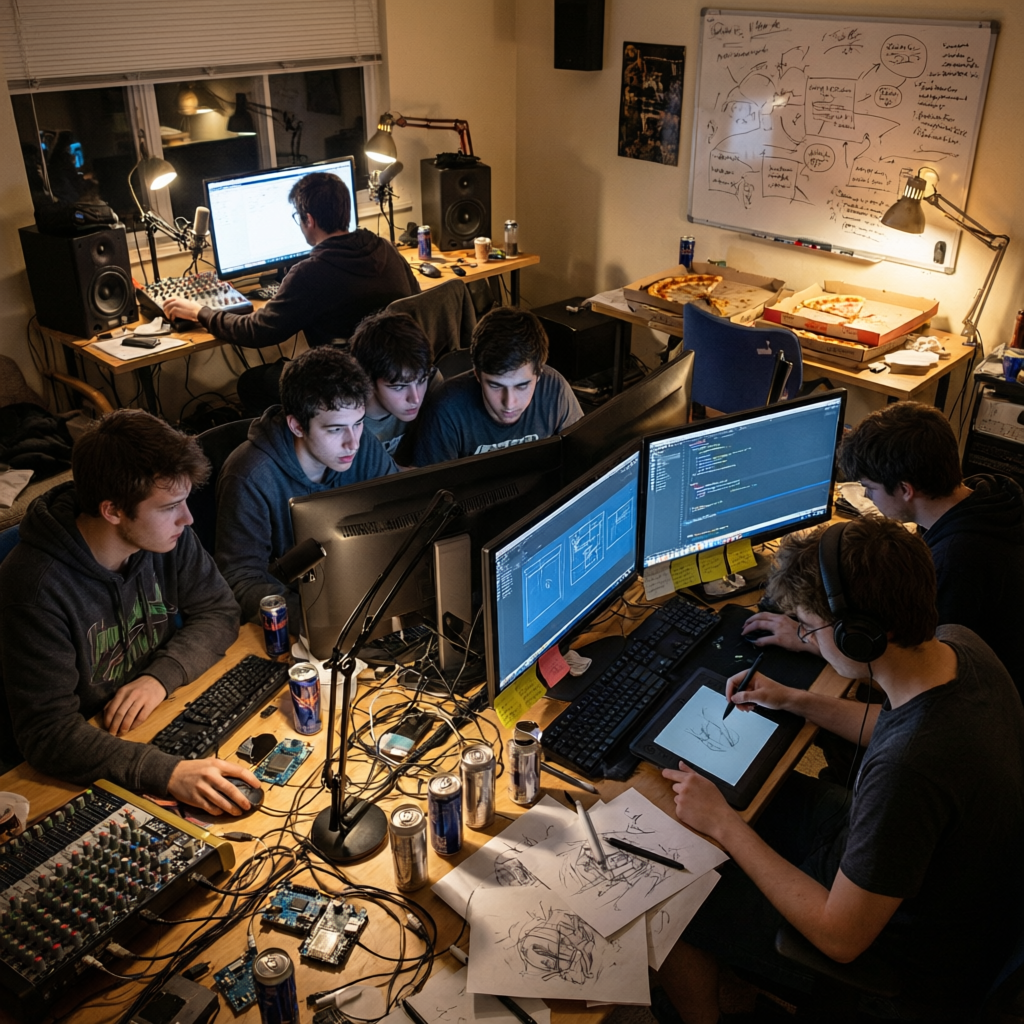
Most studios guard their design process like a secret. They hire veteran designers who spend months balancing stats and prototyping. That works, but it puts a wall between players and the game. We don't have that luxury, or that mindset. We're a student-run studio out of Tunisia. We know how hard it is to break into game dev. We want to show you that learning indie game development isn't about mastering Unreal Engine overnight. It's about having an idea and seeing it come to life. By giving you a direct line into our cycle, we're giving you a seat at the table.
When you describe a weapon idea for The Agency, you're not just daydreaming. You're writing a spec our team will read and, if the community agrees, turn into a playable gun. That's wild. Think about it: you could decide the next meta. No focus groups. No corporate mandates. Just a raw, scrappy idea voted on by other players. That's the power of a browser game that treats its community like co-developers.
Of course, not every idea makes it. We can't build something that crashes the browser or breaks the balance. But we'll tell you why if it doesn't work. We're honest about our limits. And the cost to you is zero, just an internet connection and a browser. No credit card. So go ahead, dream up something ridiculous or interesting. Maybe a gun that shoots healing darts. Maybe a chain lightning launcher. Only way to find out is to post it.
And if your idea gets built, you get credit. Your in-game name goes on the weapon description. A permanent mark on the game. For a student project, that's huge. It's not about ego; it's about showing anyone can contribute. You don't need a degree or a portfolio. Just a concept and the courage to share it.
From Upvoted Idea to Playable Weapon in 7 Days
Here's how it works after you post a weapon idea. Step one: post your concept on our community idea board. Include a name, short description, maybe a few stats. Think of it as a tweet plus half a page of details. Then voting starts. Each player gets one vote per idea; the top ideas rise. We check the board every Monday morning. The weapon with the most upvotes gets greenlit for that week.
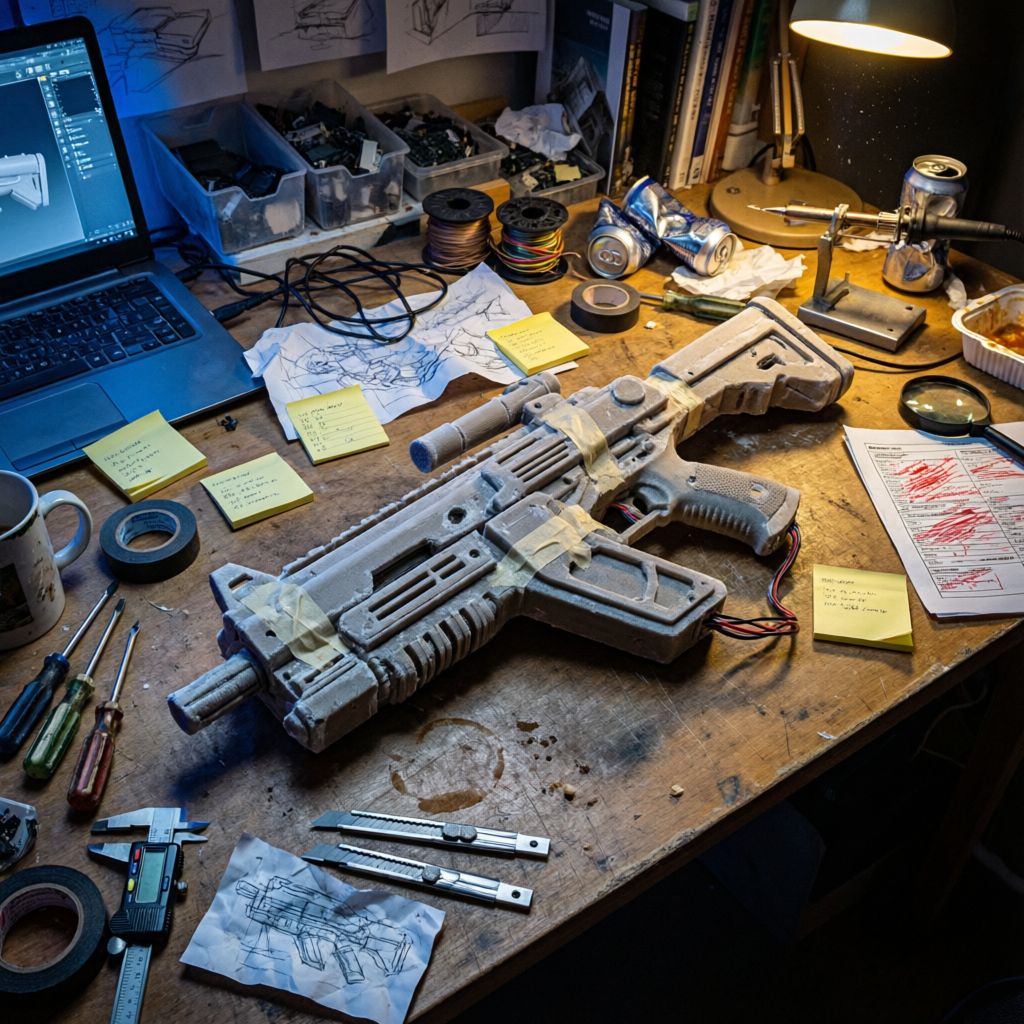
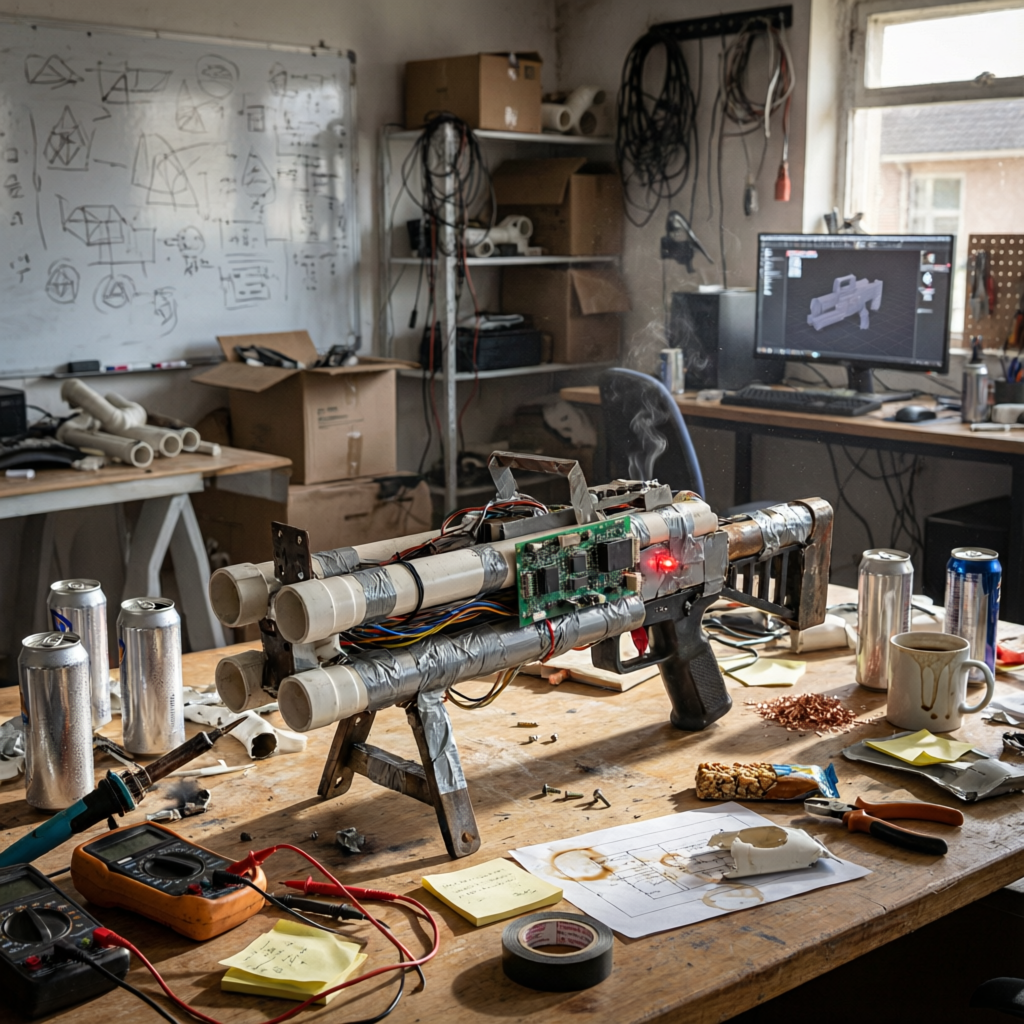
Step two: our team builds it. We're a small group of students, maybe three or four coding, one doing placeholder art, another handling sound. No massive budget, no endless time, but we have a pipeline refined over months. We start with a rough prototype. A basic mesh (often a placeholder shape), a simple script that fires, and damage numbers from your post. If you said 17 damage per shot, we test exactly that. We tweak from there, but your numbers are the starting point.
Step three: internal testing. We play a few matches, check for crashes, make sure it doesn't break the server. In a browser game, we have to watch memory and performance. A weapon that spawns too many particles could lag someone's laptop. So we optimize where we can. Sometimes we change a stat slightly, like reduce fire rate from 10 to 8 rounds per second, but we explain that in patch notes. We never nerf your idea without a reason.
Step four: ship it. By the following Monday, the weapon is live in a game mode, usually main multiplayer or RUSH wave survival. We announce it loud on Discord and in the game client. You get a notification. Your weapon idea has been built! That's it. You go from a random thought to something hundreds of players use in less than a week. That's how you succeed by including your players.
We've seen ideas that were completely broken. One player suggested a rocket launcher that fired homing clown fish. Hilarious, but technically impossible in our engine. We told them honestly: The homing fish would require AI we don't have, but we can make a rocket that leaves a fish trail. They agreed, we shipped it, and it became a fan favorite. That's the honesty we bring. We won't promise what we can't deliver, but we'll capture the spirit of your idea.
Why This Beats Traditional Development
Traditional studios spend months or years planning weapon rosters behind closed doors. Concept artists, stat prototypes, endless internal playtests. When they finally ship, the weapons might be balanced, but they often feel generic. Players didn't have a say. The Agency shows a different path: let the community drive design, and you'll get weapons people actually love.
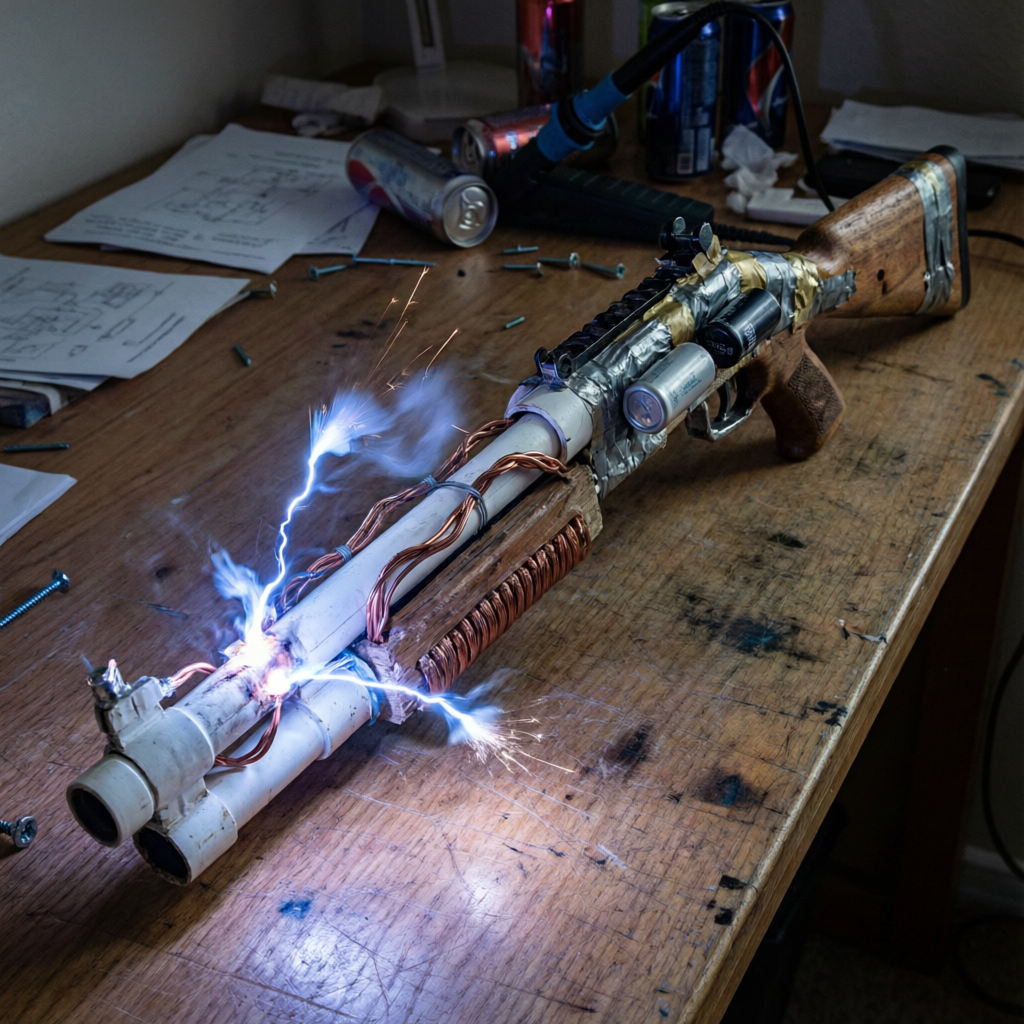
We've been doing this for six months. The most popular weapon in the game right now? A shotgun that fires scattershot lightning bolts, designed by a 16-year-old on our forum. Not the perfect pick for competitive balance, but fun. That's a key lesson: fun matters more than polish. Our players would rather have a weird, fun weapon than a perfectly tuned but boring assault rifle. That insight came directly from the voting system.
Another benefit: we never waste time building things nobody wants. How many studios design a weapon, spend thousands on production, only to have it flop? We avoid that entirely. If an idea doesn't get votes, we don't build it. The cost to us is just time, and we're spending it on what players asked for. That's efficient and honest. You don't have to worry about how to get into indie game dev as a player; you're already in just by describing a weapon idea.
Of course, there's a risk. Some weapons might be imbalanced or break the game temporarily. But that's part of the fun. We patch fast. One weapon we shipped caused a memory leak that crashed the server every hour. We fixed it in four hours, apologized, and moved on. Players appreciated the transparency. They'd rather have a broken gun that gets fixed than a perfect gun they didn't ask for.
Ultimately, this process teaches everyone, us included, how to start indie game development from a community-first perspective. It's not about following a textbook; it's about listening, building, and iterating. And if you want to be part of that, all you have to do is describe the weapon idea you want in The Agency. Post it, get some upvotes, and watch it ship next week. That's the real game: shaping the game.